
A dead pump means a green pool in a Texas summer — fast. Redzone Pools diagnoses, repairs and replaces pool pumps across Houston, from Cypress and Tomball to Katy and Sugar Land, usually the same day.
Pool pump repair is the diagnosis, repair or replacement of a swimming pool's circulation pump, covering the motor, seals, impeller, capacitor and wiring on Pentair, Hayward, Jandy and other major brands, plus upgrades to variable-speed pumps. Redzone Pools, a licensed and insured pool contractor based in Cypress, provides it across the Greater Houston area.
Your pump moves every gallon of water through the filter, heater and chlorinator. When it fails, circulation stops, the water goes cloudy or green within days, and the rest of your equipment is left sitting idle. It's the single most important piece of gear on your pad — and the one we get called about most.
Redzone Pools repairs and replaces pumps from every major brand across Cypress, Tomball, Katy, Sugar Land, Missouri City and the Greater Houston area. We diagnose the actual problem before quoting — sometimes it's a $150–$400 repair like a capacitor, seal or bearing, sometimes the motor is done. Either way you get a straight answer, not a reflexive "you need a whole new pump."
Most pump calls come down to one of these. If your pump is doing any of them, give us a call before a small fix turns into a full replacement.
Screeching or rumbling often points to worn motor bearings — repairable if caught early, a new motor if left too long (debris in the pump can sound similar, so we check that first).
Air leaks, a cracked lid, bad o-rings or a clogged impeller keep the pump from holding water and pulling a prime. Why Houston pumps lose suction twice a year.
Drips from the shaft seal or housing waste water and can flood the motor — a cheap fix now, an expensive one later.
A humming pump that won't turn, or one that trips the breaker, points to a failed capacitor, wiring or motor. Just had an outage? Try the post-storm restart sequence first — and if the pad went under water, read whether a submerged pump motor can be saved before switching anything on.
A pump that cuts out after a while is often overheating — blocked airflow, low voltage or a motor on its way out.
An aging single-speed pump runs at full speed every hour it's on, so it's often worth pricing a variable-speed replacement alongside the repair.
If your pump is failing and it's still a single-speed, replacing it with a variable-speed pump is worth pricing alongside the repair. It can run at lower speeds for most of the day instead of full speed every hour it's on, which is where the electricity saving comes from, and it's quieter turned down. How much you save depends on your run schedule and electricity rate, so we price both options for you.
We help you pick the right size and model for your pool, handle the swap, and set the speed schedule so it just works. Ask us whether a repair or a variable-speed upgrade makes more sense for your setup — we'll give you the honest math.
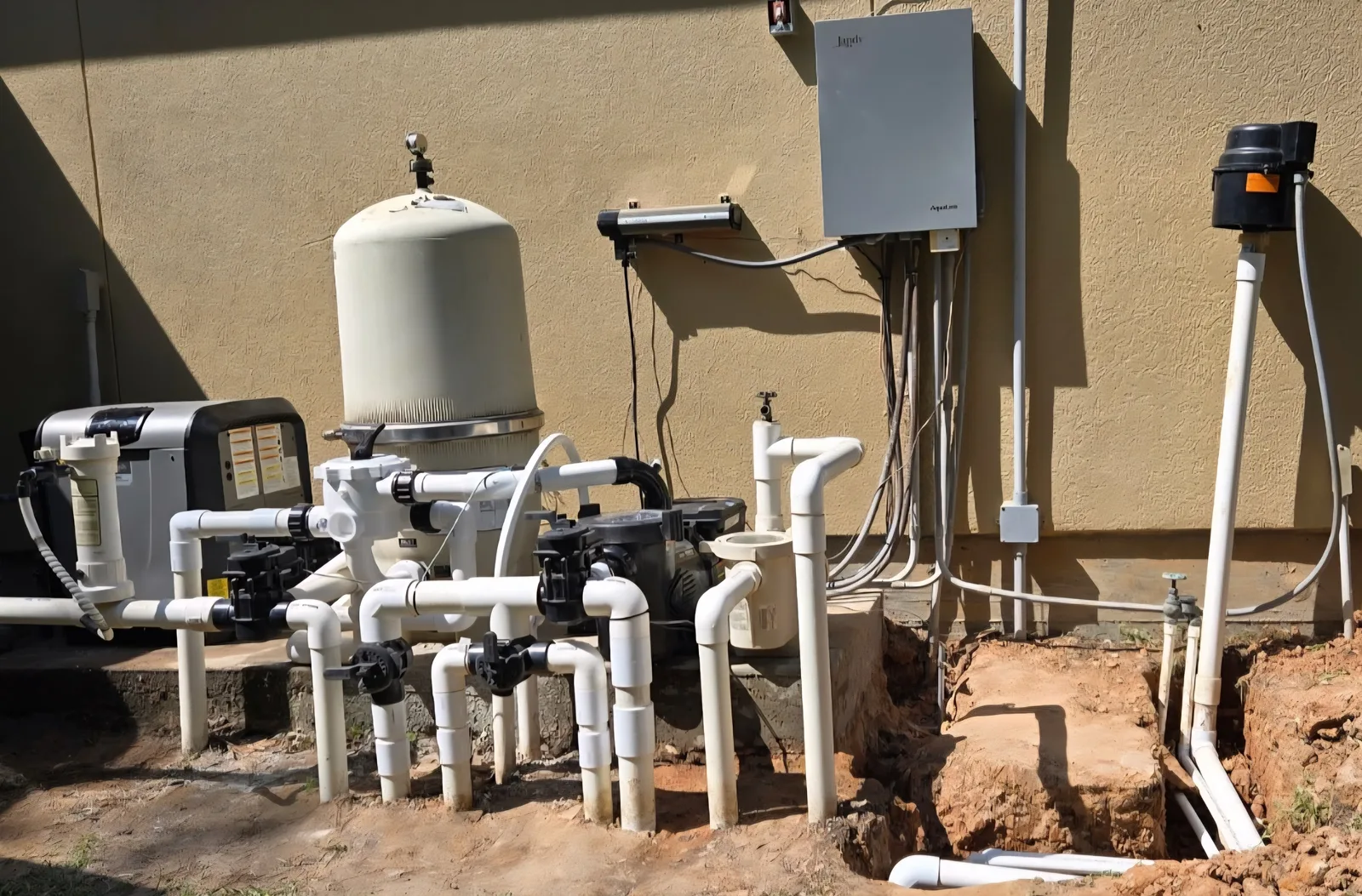
We repair and install pumps from all the major manufacturers — Pentair (SuperFlo, IntelliFlo, WhisperFlo), Hayward (Super Pump, TriStar, MaxFlo) and Jandy (FloPro, VS-FloPro), among others. Whatever's bolted to your pad, we can source the parts and get it running. If a Pentair IntelliFlo is showing an alarm, our guide to IntelliFlo pump alarms explains each one. If a Hayward TriStar, MaxFlo, Super Pump or EcoStar shows Check System, our guide to Hayward pump error codes covers each message, and for a Jandy VS FloPro showing a fault or "pump not connected", see our Jandy VS FloPro fault guide.
A pump is only one piece of the puzzle. See our full pool equipment repair service, or if your water's still cloudy after the pump's fixed, the problem may be your filter or salt system.
Pool pump leak repair is finding which seal, gasket or fitting is letting water out and replacing it before the leak reaches the motor.
The usual culprit is the shaft seal, where the pump meets the motor. Pentair's pump manual is blunt about how it fails: if the pump runs dry, the mechanical seal is damaged and the pump starts leaking, and the damaged seal has to be replaced. Running dry usually starts with low water. When the level falls below the skimmer opening, the pump draws air, loses its prime and runs dry. Pentair also warns that the seal's polished faces will leak if they're scratched, which is why a seal replacement is a careful job rather than a quick swap.
Other leak points are the pump gasket, the lid O-ring, the drain plugs and threaded fittings. A leak on the suction side can show up as air in the pump instead of water on the pad: Pentair lists air leaks in the suction line as a reason a pump won't prime. Most seal and gasket repairs fall in the $150–$400 range we quote for pump repairs. Why pumps lose prime in the first place is in our guide to a pool pump losing suction.
“Excellent experience with our pump installation! Darron and Amanda made the whole process easy from the first call to the finished install — honest pricing, everything explained clearly, and quality work. … If you need pool work in the Cypress area, these are the people to call.”
“Very knowledgeable and helpful and quick to Repair and upgrade my system at the lowest cost possible”
Every review on our Google Business Profile is five stars, from homeowners across Cypress and Greater Houston.
With us, a repair such as a capacitor, seals or bearings often runs $150–$400. Replacing a single-speed motor is roughly $900–$1,000, and upgrading to a variable-speed pump is about $2,000–$2,400. The full price list is in our Houston pool repair cost guide.
If the problem is a capacitor, a seal or a bearing, repairing usually makes sense, typically $150–$400. If the motor itself has failed on an old single-speed pump, weigh a new motor (about $900–$1,000) against a variable-speed upgrade (about $2,000–$2,400); the running-cost difference depends on your schedule and electricity rate. Our guide to variable-speed pump savings explains where the saving comes from, and our guide to replacing the motor or the whole pump covers the parts side.
Most pump leaks come from the shaft seal, where the pump meets the motor. Pentair's pump manual warns that running a pump dry damages the mechanical seal and starts it leaking, and that a damaged seal has to be replaced. Get it fixed early: a seal is an ordinary repair, but water that reaches the motor can turn it into a motor replacement. How pumps end up running dry is covered in our guide to why a pool pump loses suction.
Screeching or rumbling from the motor often points to worn motor bearings — repairable if caught early, a new motor if left too long. If the pump got louder right after a leaf drop or a drop in the water level, check the baskets and the water level first; a pump that's short of water often sounds rough.
A pump that hums but won't turn, or one that trips the breaker, usually points to a failed capacitor, wiring or the motor itself. After a power outage, run through our post-storm restart sequence first — and if the pad went under water, read whether a submerged pump motor can be saved before switching anything on.
All the major ones — Pentair (SuperFlo, IntelliFlo, WhisperFlo), Hayward (Super Pump, TriStar, MaxFlo) and Jandy (FloPro, VS-FloPro), single-speed and variable-speed, across Houston.
Usually repaired. A leaking shaft seal, gasket or O-ring is replaced, typically within the $150–$400 range we quote for pump repairs. Replacement comes into it when the leak has been left long enough to damage the motor or the pump case; Pentair warns that a pump kept running dry can damage the case, impeller and seal.
Tell us what your pump's doing — the noise, the leak, the dead switch — and we'll get you a straight answer and a fair quote, usually same day.