
A salt cell doesn't usually die overnight — it fades. Chlorine output drops, algae creeps in, and the pool "goes green for no reason." Here's how to tell a dirty cell from a dead one, what you can clean yourself, and when replacement is the honest answer.
Your salt cell is the part that actually does the work. Salt water flows through it, an electric current splits the salt, and chlorine is produced right there in the plumbing. When the cell weakens, nothing dramatic happens — no bang, no leak. It just makes less chlorine every week.
That's why the classic symptom isn't "my salt system broke." It's "my pool keeps going green and I can't work out why." The chemistry looks fine on paper, you're adding salt, the pump is running — and algae still wins. Nine times out of ten in our experience, that's the cell.
This is the part most manufacturer lifespan estimates don't account for. Greater Houston has hard water — high calcium — and calcium is exactly what scales up a salt cell. That white crust on the plates insulates them, and an insulated plate can't produce chlorine properly.
Add our long, hot swim season, which means the system runs far more hours a year than it would up north, and the result is simple: salt cells in Cypress, Spring, Tomball and across Greater Houston wear out faster than the box suggests.
The practical takeaway: keep your calcium hardness and pH in range, inspect the cell for scale a couple of times a season, and don't be surprised when a cell needs replacing sooner than a friend's in a softer-water part of the country.
Before replacing anything, rule out scale — it's the single most common reason a cell "stops working," and it's fixable.
Power the system off at the breaker, remove the cell, and look inside at the plates. If you see white crusty buildup, it needs cleaning. Many cells can be cleaned with a proper cell-cleaning solution or a diluted muriatic acid rinse — always add acid to water, never water to acid, wear eye protection and gloves, and follow your manufacturer's instructions, because soaking too long or too strong strips the plate coating and destroys the cell you're trying to save.
If it comes back clean and output returns — great, you saved a replacement. (On a Hayward AquaRite, remember to hold the Diagnostics button afterward to reset the 500-hour reminder — our AquaRite Inspect Cell light guide covers the resets.) If the plates are already clean, or output stays low after cleaning, the cell is worn out and cleaning won't help.
Not comfortable handling acid? Fair enough — that's a normal call for us. We'll test the system, clean or replace the cell, and check the controller while we're there.
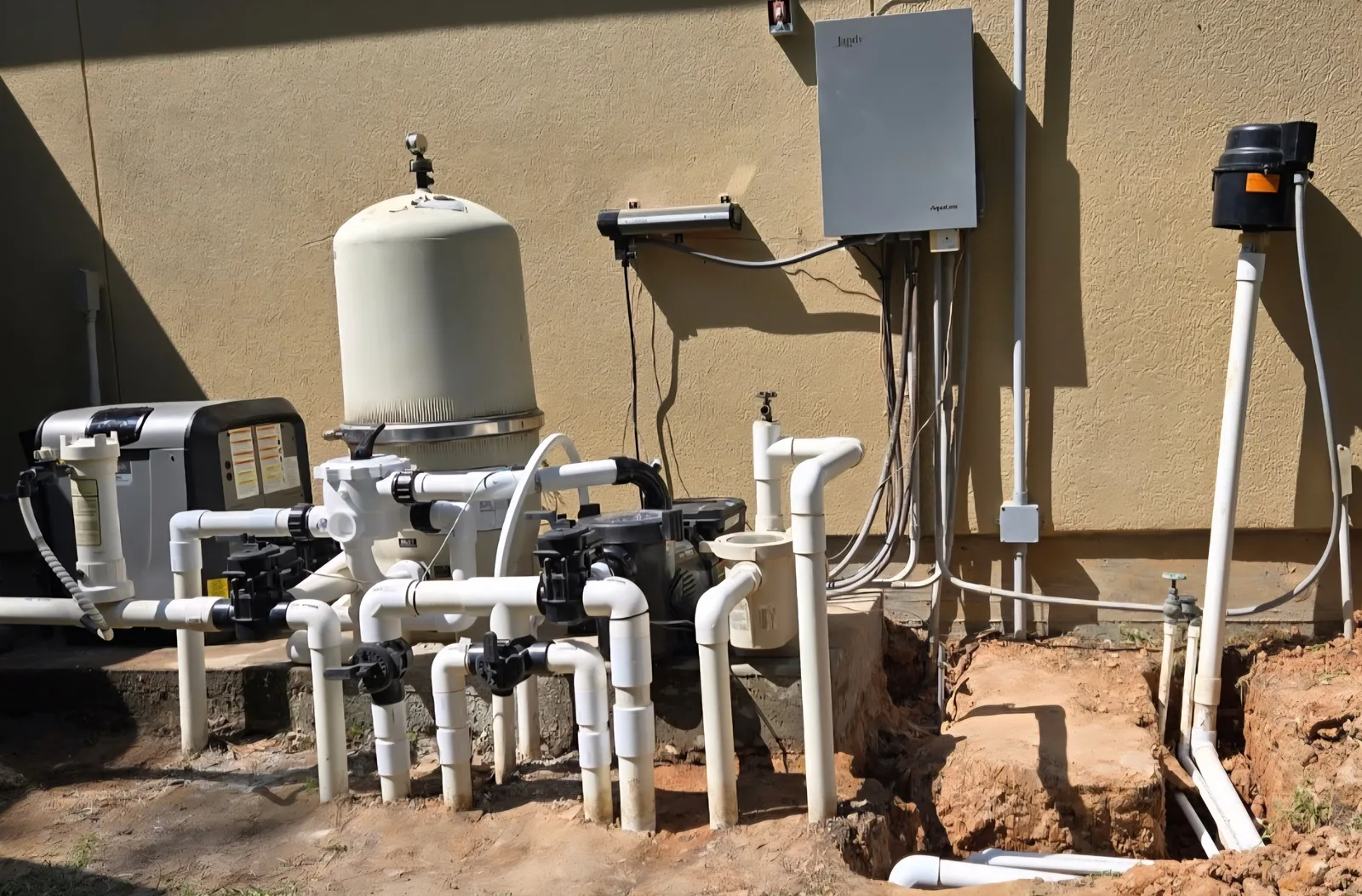
Before spending on a new cell, it's worth ruling these out — we've seen all three send homeowners down the wrong path:
And if the trouble started with the first cold front, it may be nothing at all: every major brand switches its salt cell off in cold water by design.
Diagnosing which of these it actually is, before money changes hands, is the whole point of a proper service call. See our salt system repair page for what we check.
Several years is typical, but it varies a lot with water chemistry and run time. In Greater Houston's hard water and long swim season, cells generally wear out sooner than manufacturer averages suggest. Keeping calcium and pH in range and cleaning off scale is the best way to get the most out of one.
Often yes — power the system off, remove the cell and inspect the plates. Scale can be removed with a cell-cleaning solution or properly diluted acid. Always add acid to water (never the reverse), wear eye protection and gloves, and don't over-soak: too long or too strong strips the plate coating and ruins the cell. If that sounds like a job you'd rather not do, we handle it as part of a service call.
Usually because the cell has quietly stopped producing enough chlorine — the pool looks like a chemistry mystery when it's really a hardware problem. It can also be low salt, poor circulation from a weak pump or clogged filter, or stabilizer that's too low to protect the chlorine from the Texas sun. We diagnose which before recommending parts.
If the control board and plumbing are healthy, replacing just the cell is the cheaper fix and usually the right one. If the board has also failed, or the system is old and parts are getting hard to source, a full replacement can make more sense. We give you both numbers and a straight recommendation — see our salt cell replacement cost guide for the by-brand figures, or the Houston pool repair cost guide for everything else.
Most people don't want to once they've had salt — the water feels better and it's far less hands-on. A replacement cell is usually the simpler decision. If you're weighing it up, our salt water vs. chlorine guide lays out the real trade-offs for Houston pools.
Tell us what your system is doing — or send a photo of the cell — and we'll tell you whether it needs a clean, a new cell, or something else entirely. Straight answer, fair quote, usually same day. Serving Cypress and Greater Houston.