
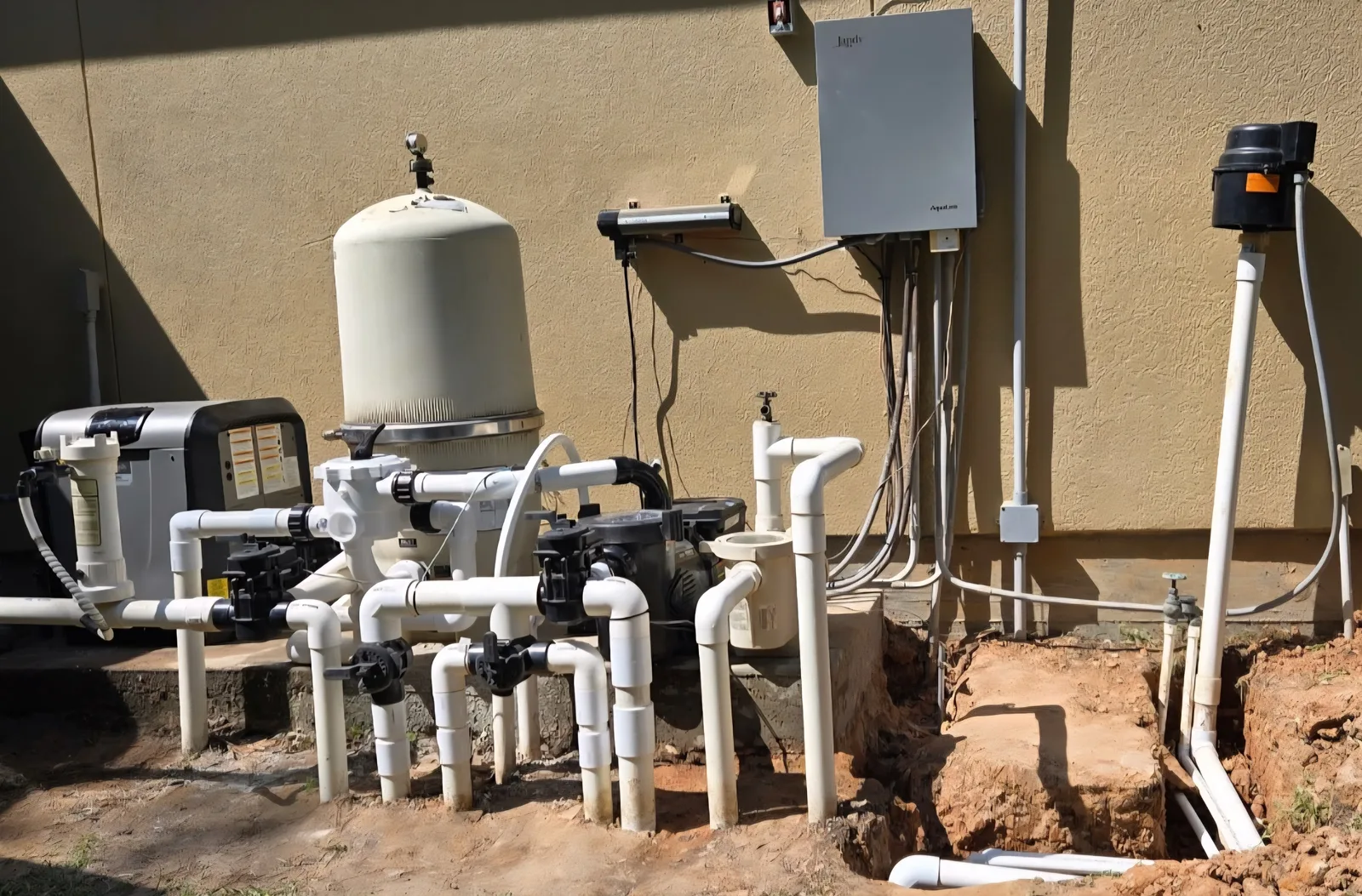
Houston pools don't get closed for the winter, so when a real freeze comes the pump, filter, heater and plumbing are all sitting outside full of water. What protects them is simple: water that keeps moving, and the electricity that keeps it moving. This is the playbook — what to set up before the first cold front, what to do while it's freezing, and what to check before you restart anything afterwards.
Redzone Pools protects and repairs pool equipment across Cypress, Tomball, Katy, Spring and Greater Houston — licensed, insured, usually same day.
The National Weather Service defines a freeze as 32°F or below over a wide area, and a hard freeze as 28°F or lower for an extended period. Those are the numbers most people have heard. What most people haven't heard is how the Houston/Galveston office actually issues its alerts.
Its Freeze Watches and Freeze Warnings are only issued for the first freeze of the season, and possibly again late in the winter if a freeze follows a stretch of growing weather. Since October 1, 2024 there's no separate Hard Freeze Warning either — the office adds hard-freeze wording to its freeze products when temperatures of 24°F or lower for two hours or more are possible. After that first freeze, a freezing night can pass with no alert at all; only the colder ones trigger a Cold Weather Advisory or an Extreme Cold alert.
So after the season's first freeze, don't wait for a warning to tell you your pool is at risk. Watch the forecast lows yourself. Pentair's own pump manual puts it plainly: you are responsible for determining when freezing conditions may occur.
How long the cold lasts matters as much as how low it goes. A couple of hours near freezing before sunrise is a very different night from a cold snap that lasts for days while the power is out — the combination Texas saw during Winter Storm Uri in February 2021.
1. Check the water level. This comes first because everything else depends on it. If the water sits below the skimmer opening, the pump draws air, loses its prime and runs dry — and Pentair's pump manual says a pump run dry damages its mechanical seal. Freeze protection that switches on with the water too low burns up the seal and still doesn't keep water moving. If it's low, top it up. The dry-run problem is covered in our guide to why a pool pump loses suction.
2. Make sure freeze protection is actually on. Most automation systems can turn the pump on by themselves when it gets cold. On Pentair's EasyTouch, for example, the manual says that when the outdoor air sensor falls below 36°F, freeze protection switches the filter pump on to circulate the water; the pool and spa circuits have it on by default, and with both assigned, the system alternates the pool and spa valves every 15 minutes so both keep moving. Other brands have their own settings and thresholds — where each one lives on Pentair, Hayward and Jandy is in our guide to pool freeze protection settings, and the time to check yours is now, not the night of the freeze.
3. Plan for the power going out. Freeze protection is electric. It does nothing when the power is off — and Jandy's AquaLink manual is candid that freeze protection is meant for short periods of freezing only and doesn't guarantee against damage from extended freezes or power outages. During Winter Storm Uri, close to 4.5 million Texas homes and businesses lost power at the peak, and a University of Houston survey found that the 69% of Texans who lost power were without it for an average of 42 hours. Know where your pool breaker is and where the drain plugs on your pump and filter are before you need them.
Run the pump. Don't turn it off to "protect" it. Moving water is the protection. Pentair's pump manual says that in mild-climate areas, when temporary freezing conditions may occur, you should run your filtering equipment all night to prevent freezing. If your automation handles it, let it; if you have no automation, run the pump manually through the cold hours.
Don't wrap a running motor. The same manual says never to wrap the motor in plastic or other airtight material, and that a motor may be covered during a storm or storage but never while it's operating or expected to operate — which, in a freeze, is exactly when it's running. A motor needs air to cool itself.
Expect your salt system to stop. Pentair's IntelliChlor switches itself off when the water drops below about 52°F and lights its Cold Water indicator, and on an EasyTouch system it doesn't make chlorine while freeze protection is running the pump. Keep an eye on chlorine and add it by hand if a cold stretch drags on. Hayward and Jandy cells have cutoffs of their own; our guide to salt cells in cold water lists each one.
Don't count on a heat pump. Pentair's UltraTemp manual says its heat pump may go into a defrost cycle when the air is around 50°F, and if the coil doesn't clear within 15 minutes it shuts down with a Low Ambient Temp alarm. It's a good heater most of the year — the trade-offs are in our guide to repairing or replacing a pool heater — but it isn't freeze protection.
If the power goes out, the pump stops and so does freeze protection. For a pump, Pentair's winterizing steps are to shut off power at the breaker and drain the housing by removing its two drain plugs, keeping the plugs in the pump basket. Filters, heaters and salt cells have their own drain steps, collected from each manual in our guide to pool freeze protection without power. If you're unsure, call us before the temperature drops, not after.
If the pump ran through the whole event, check that it's still running, the returns are moving and the filter pressure is normal. If it stopped — a power cut, a tripped breaker, a drained pump — walk the pad before you switch anything back on. Look for cracked pump or filter housings, split fittings and water where there shouldn't be any.
If you drained the pump, put the drain plugs back and fill the pump pot with water before starting it; Pentair's manual says the pot must be full before the pump starts. The full restart order is in our equipment restart sequence.
One more reason to take the setup seriously: Pentair's pump manual states that freeze damage is not covered under warranty. If something did crack, our pool equipment repair team handles pumps, filters, heaters and plumbing across Greater Houston, and our pool pump repair page covers the pump side.
Yes. Moving water is what keeps the equipment from freezing. Pentair's pump manual says that in mild climates, when temporary freezing conditions may occur, you should run your filtering equipment all night. Check the water level first: if it's below the skimmer opening, the pump can lose its prime and run dry, which damages its seal.
It depends on the system. Pentair's EasyTouch manual says freeze protection switches the filter pump on when the outdoor air sensor falls below 36°F. Jandy's AquaLink RS defaults to 38°F and can be set anywhere from 34°F to 42°F. Other systems use their own thresholds and settings, so check yours in the fall, before the first cold front.
The National Weather Service defines a hard freeze as 28°F or lower for an extended period. The Houston/Galveston office adds hard-freeze wording to its alerts when 24°F or lower for two hours or more is possible. How long the cold lasts matters as much as how low it goes.
No. The Houston/Galveston office issues Freeze Watches and Warnings only for the first freeze of the season, and possibly late in the winter after a stretch of growing weather. After that, a freezing night can pass with no alert at all — only colder ones trigger Cold Weather Advisories or Extreme Cold alerts — so watch the forecast lows yourself.
Not the pump motor while it's running. Pentair's pump manual says never to wrap the motor in plastic or other airtight material, and that it may be covered during a storm or storage but never while it's operating or expected to operate. In a freeze the pump should be running, so leave the motor uncovered.
It stops, because it needs electricity to run the pump. During Winter Storm Uri close to 4.5 million Texas homes and businesses lost power at the peak. If your pump will be off in a hard freeze, Pentair's steps are to shut off power at the breaker and drain the pump housing by removing its two drain plugs.
Usually not. Pentair's IntelliChlor switches itself off when the water falls below about 52°F, and on an EasyTouch system it doesn't produce chlorine while freeze protection is running the pump. Check chlorine and add it manually if a cold spell lasts.
We'll check your water level, confirm your freeze protection is on and working, and show you where your breaker and drain plugs are — before the first cold front, not the night of it. Licensed, insured, serving Cypress and Greater Houston.