
Buying a house with a pool in Texas? Your home inspection may not cover it. Under the state's inspection rules, a pool is an optional system: a home inspector doesn't have to inspect it at all, and when they do, the rules spell out what they must report and what they're allowed to skip. The skipped list includes the inside of the filter, the automation and the salt system. Here's exactly what the Texas standard says, where the gaps are on a Houston equipment pad, and what a pool equipment inspection adds before your option period runs out.
Redzone Pools inspects pools and pool equipment for home buyers and realtors across Cypress, Katy, Spring, The Woodlands and Greater Houston — licensed and insured.
A pre-purchase pool equipment inspection is a separate inspection of a pool's pump, filter, heater, salt system and automation by a pool technician, done before you close, so you know what the equipment you're inheriting actually needs.
Texas home inspectors work to the Texas Real Estate Commission's standards of practice. Those standards put swimming pools, spas, hot tubs and their equipment under "optional systems", and the first line of that section is plain: an inspector is not required to inspect them (22 Tex. Admin. Code §535.233). If an inspector agrees to inspect the pool, the same section sets the minimum they have to cover.
That's not a criticism of home inspectors. They cover a whole house in one visit, and the pool section asks them to catch exactly the safety items that matter most. It just wasn't written to tell you whether a heater, a salt cell or a filter is near the end of its life.
When a Texas home inspector does inspect the pool, 22 Tex. Admin. Code §535.233 lists both:
| Must report as deficient | Not required to |
|---|---|
|
|
The general rules add a few more limits. Under §535.227, a Texas inspector isn't required to inspect automated or programmable control systems and timers, to predict the future performance of any item, to light a pilot or apply an open flame to run an appliance, to turn on decommissioned equipment, or to give repair cost estimates.
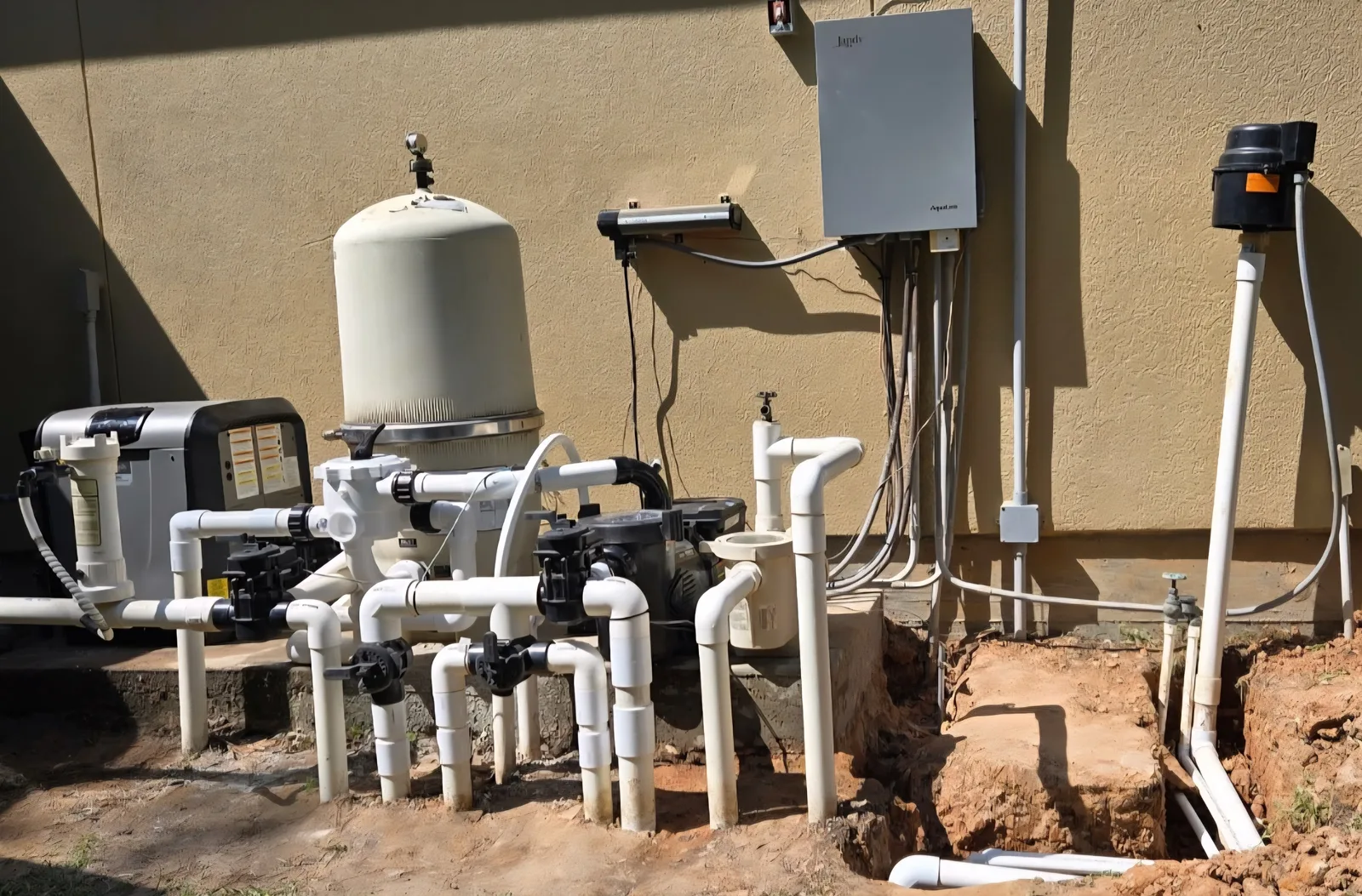
Lay that list over a typical Houston equipment pad and the expensive parts are the ones the standard lets an inspector leave alone:
None of that shows up as a defect on a report that didn't look at it. That's how a buyer can end up finding a worn-out salt cell or a heater on its last season after moving in.
A pool equipment inspection starts where the general standard stops: we run the system and test each component.
You get a written report of what we found and what it means, not a quote sheet. If you decide to fix something afterwards, you're free to take the report anywhere. Full details are on our pool inspection page.
If the inspection turns up repairs, our Houston pool repair cost guide lists our typical prices, so you have a number to negotiate with.
A home inspector looks at the whole house; we look at the pool system the way we would if we had to repair it, because that's what we do every day. If something needs work, see our pool equipment repair and pool heater repair pages for what's involved.
Not necessarily. The Texas Real Estate Commission's standards treat pools, spas and hot tubs as optional systems that an inspector is not required to inspect. If they agree to, they must report items such as a single blockable main drain, missing bonding or GFCI protection, barrier problems, above-ground leaks and deficiencies in the pump, filter and heater.
Ours runs the system and tests each component: the pump and motor (noise, seal leaks, prime, flow), the filter (pressure against its clean baseline, tank and clamp), the heater (that it fires and holds, stored fault codes, heat exchanger condition), the salt system (cell condition and whether the reading matches an independent test) and the automation, lights and valves. You get a written report.
They don't have to. The Texas standard lists chlorinators and other chemical dispensers as ancillary equipment that an inspector is not required to inspect, along with computer controls. Checking the salt cell is part of a pool equipment inspection.
If the pool matters to you, yes. The two cover different ground: the home inspection covers the house and, if the inspector includes it, the pool's safety items and visible condition; a pool equipment inspection tests the equipment and tells you what it is likely to need. Booking both early in the option period leaves time to negotiate.
Ask for the pool to be filled, the equipment powered on and running, and the gate and equipment pad accessible. Texas inspectors aren't required to fill a pool, run a system that's shut down or operate anything that needs a code or key, and a pad that's switched off can't be properly tested.
We quote the inspection up front as a flat fee for the property, so you know the number before we schedule. See our pool inspection page for details, or call us with the address.
Tell us the address and your option period deadline. We'll inspect the pool and its equipment and give you a written report you can use to negotiate. Licensed, insured, serving Cypress and Greater Houston.